

Listen on Apple!
Listen on Spotify!
00:00:05:21 – 00:00:17:01
Synergee
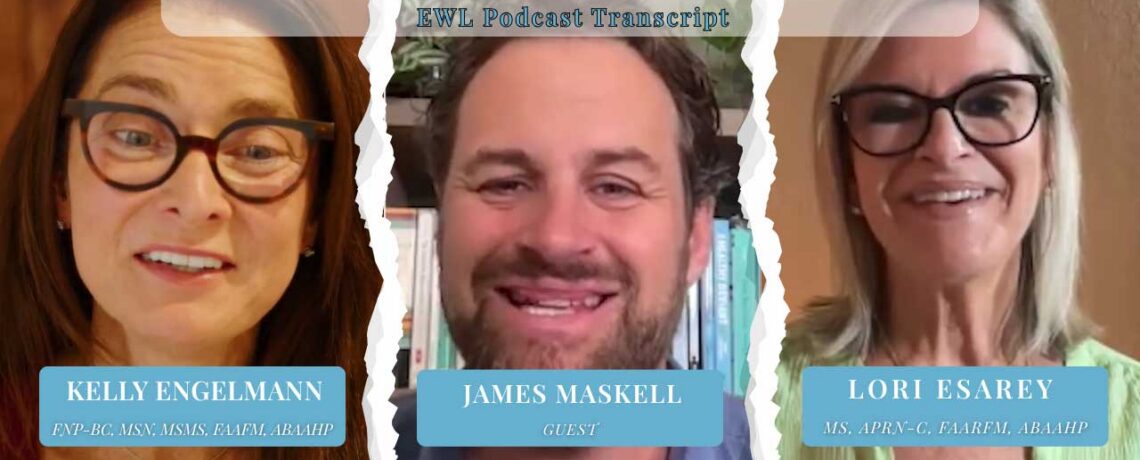
Welcome back to the Synergee Podcast. We are so excited that you’re here with us today for a conversation that truly gets to the heart of why Synergee exists, and that’s transforming the way that we think about and practice health care. Today, we’re diving into a conversation with James Maskell, the author of The Evolution of Medicine. And this book is more than just an action plan in functional medicine Ridgeland MS.
00:00:28:21 – 00:00:51:13
Synergee
It is a roadmap to create a health care revolution rooted in connection community prevention in a world where chronic disease is the norm. This conversation reminds us that the future of medicine isn’t found in more pills or procedures. It’s found in people, the practitioners who listen, the patients who are empowered, and the community that wants to heal together with integrative health in Ridgeland MS.
00:00:51:13 – 00:00:58:00
Synergee
Guys, if you haven’t already, we would love to invite you to download the R to R app, that’s Reset to Resilience.
00:00:58:00 – 00:01:22:18
Synergee
Inside, you’ll find weekly free content designed to help you take ownership of your health care journey. It’ll teach you practical tools, education, and inspiration. It’s going to help you become an active participant in your own healing. It’s also a space where you can connect with others. Others that believe, just like you. True healing comes from connection.
00:01:22:20 – 00:01:55:01
Synergee
And today’s conversation. If it sparks something in you, if you believe in this movement toward functional, root cause, person centered care. Please take the time. Scroll to the bottom. Follow us, like us, and share us. Your encouragement helps get this message out. It fuels the change that we all want to be part of creating. Lori and I are so grateful that you’re here with us, helping us shape the evolution of medicine not just as listeners, but as leaders in your own lives and also in the community.
00:01:55:03 – 00:02:00:14
Synergee
Because this is more about a moment. This is a movement and we’re in it for the long game.
00:02:00:14 – 00:02:18:15
Synergee
Today on the synergy Podcast we are so glad you’re here because we are thrilled to welcome James Maskell, entrepreneur, advocate and changemaker in the world of health care. For over a decade, James has been on a mission to transform our broken disease management system into one that truly promotes wellness.
00:02:18:17 – 00:02:44:13
Synergee
He’s the founder of Functional Forum, the world’s largest integrative medicine conference and evolution of Medicine, a platform that equips conventional doctors with the tools and resources to practice more patient centered, functional medicine. His work has been featured on TEDx med, TEDx X, HuffPost live, and Mindbody Green, and he continues to spark global conversations about what health care could and should be and should look like.
00:02:44:15 – 00:03:08:11
Synergee
James is also the author of The Evolution of Medicine, Join the Movement to Solve Chronic Disease, and Fall Back in Love with Medicine, a groundbreaking book that lays out the blueprint for a future where prevention, community and functional medicine come first. Today, we get the chance to explore why health care must change, what that means for patients and practitioners, and why mental health, too often overlooked, has to be part of the conversation.
00:03:08:11 – 00:03:17:03
Synergee
so grab a cup of coffee, make me a cup of tea. And your favorite writing utensil. Lean in. You are going to really enjoy this conversation.
00:03:17:03 – 00:03:30:01
Synergee
James, we’re so excited that you’re here, and we know Lori and I both know that you have spent your life working on this healthcare revolution. Right? And you’re a man in healthcare, and we’re seeing more and more men show up in our clinics, which we’re so excited about.
00:03:30:03 – 00:03:49:06
Synergee
I think men are willing more than ever to take care of themselves. They’re looking in the mirror and saying, hey, I don’t like where healthcare is going. I don’t like where my health is going. And so we’re super excited to see that. But what got you interested in challenging the norm, the status quo of conventional medicine, like where did that start for you?
00:03:49:06 – 00:04:03:07
James Maskell
It starts right at the beginning, where I, given different health care than anyone else that I know. You know, and I didn’t realize that it was abnormal until I showed up at school and realized that no one knew what a chiropractor or homeopath was.
00:04:03:09 – 00:04:25:14
James Maskell
And I remember sitting with the nurse at school and seeing a piece of paper, like a post-it note on the wall, and it said James Maskell, no antibiotics until you called mother. And then and reflecting on it, I was like, why that? And why am I only posting it now? It’s not like there’s a list. I bet if you went into a school today, there’d be like, these 50 kids will have a peanut allergy, right?
00:04:25:20 – 00:04:52:08
James Maskell
But back then it was just one. And so I was like, why am I the only one? And so, you know, that sort of sat with me. I had a rebellious phase where I thought my parents were insane. And then, you know, I get to school and get to university, and I’m studying economics and then start to see this sort of exponential cost curve that starts, you know, in the 80s and essentially the cost of health care going up and up and up all on the back of chronic illness.
00:04:52:10 – 00:05:12:07
James Maskell
And I realized at that moment, these guys don’t know what they’re doing. Like, this is not this is not a curve for success. This is not a curve for understanding what’s going on and getting a handle on it. This is a curve for you know, this is not working. And you know, ultimately I had a couple of kicks from the universe to say, hey, you know, go and follow this thread.
00:05:12:09 – 00:05:34:22
James Maskell
And in 2005, I moved to America, quit my high paying job, and went to live in rural Georgia because I had an opportunity to work in a clinic and really understand what a new paradigm of health care could look like. And, that was from some family connections, and it was sort of them that gave me the idea that this would be something that I could follow.
00:05:35:04 – 00:05:45:02
James Maskell
And I knew that I also knew I sort of wanted to make my own things and be an entrepreneur and have a varied life. And I, I’ve seen some of that through them. So I thought that was a decent bet.
00:05:45:02 – 00:05:52:02
Synergee
Yeah. So in that clinic in rural Georgia, like, what specifically was the focus of that clinic and how old were you at that time?
00:05:52:02 – 00:06:12:14
James Maskell
Man 20. I moved when I was 24. Okay. I yeah, the clinic was a they had they had been in the spa industry. So I had, I had actually gone to work in that business. They had a skincare line called Jalique, and it was the first skincare line that was sold that was all natural. It’s from Australia and was sold in spas, so it was like a spa.
00:06:12:16 – 00:06:39:18
James Maskell
And they had run day spa and day spa. They actually predate the functional medicine clinics of today by 10 or 15 years. And learning how to take cash, learning how to deliver services, learning how to rebook people, learning how to create a great experience. And they essentially convinced me that they were going to build a model for the future of primary care, and which was essentially integrative medicine in a spa environment.
00:06:39:20 – 00:07:02:23
James Maskell
Yeah. And so I was inspired by that. I moved. I worked in the warehouse for a bit, and then I started working in the business, and it was a beautiful old home, like in the nicest street in a little town in North Georgia. And, you know, I spent about half of my time working on sales. So I was sort of making calls and trying to get different businesses in the local community to use the spa.
00:07:03:01 – 00:07:23:15
James Maskell
But then I was also working behind the front desk, and in the year and a half that I worked there, I saw a few things that I couldn’t forget. One is, I saw people reverse their chronic illness, and there was a natural doctor on staff there, and I worked with him. I saw what he did. I started to learn what he was doing and it was essentially clinical nutrition.
00:07:23:20 – 00:07:43:22
James Maskell
There was some fighter therapy. There was some homemade toxicology, you know, so he’s really built, you know, doing the sort of range of services that, you know, sort of advanced functional medicine doctors do. Now, he had his own way of assessing what was going on. But I saw people reverse a chronic illness. And, you know, I worked for 18 months because it didn’t happen, appointment to appointment.
00:07:43:22 – 00:08:03:20
James Maskell
But it did happen over three, six, nine, 12 months. And it was very formative. Those experiences were very formative. And I thought to myself, is that just happening here or is this happening anywhere else? And so the next job that I took, I went and took a sales job and I started selling supplements to practitioners like yourself.
00:08:03:22 – 00:08:27:01
James Maskell
And the next seven years was the deepest, broadest experience of really understanding the natural, the professional natural health industry. I had 14 states. I had all kinds of clinics from micro practices in people’s garage all the way through to going to meet doctors in hospitals that didn’t know what had happened, but their wife had gotten better, and they wanted to know what this was and all everything in between.
00:08:27:03 – 00:08:43:21
James Maskell
And I think I just had such a broad experience that I really started to understand what was holding back this medicine from becoming the standard of care for chronic illness. And I think since then, since 2014, it’s all been removing the blockages for that to become the norm.
00:08:43:21 – 00:08:48:23
Synergee
Yeah. So that’s where you discovered a lot of those blockages are being out and about in the different practice accounts.
00:08:49:01 – 00:08:49:14
James Maskell
Right.
00:08:49:14 – 00:09:14:06
James Maskell
And asking a lot of questions, seeing those seen walking into the clinics, like seeing how the flow was seeing, you know, what the what changes were, what was different in those kinds of clinics from clinics that were just doing conventional medicine. And these were the very early days, too, like there’s so much innovation that’s happened in the last ten years, but those early years, that was 2007 to 2010, pretty much.
00:09:14:07 – 00:09:17:23
James Maskell
And, you know, so it was a very different industry at that point. Yes. Yeah.
00:09:18:06 – 00:09:19:17
Synergee
Hi, friends. It’s Kelly and Lori, and we are so excited to tell you about everything new inside the R to R app.
00:09:24:15 – 00:09:33:10
Synergee
Listen, this is not just another health app. It’s your safe space to reset, rebuild and reclaim your energy, your confidence and your health.
00:09:33:10 – 00:09:47:20
Synergee
And the best part? Downloading the R to R app is completely free. You’re going to get weekly free content plus powerful resources to help you get started or help you stay on track no matter where you are on your wellness journey.
00:09:48:04 – 00:10:06:19
Synergee
Inside the app, we just launched our new brand new. The app Power Program was created especially for women in midlife. Every month you’ll get fresh content, daily habit trackers, a private community chat, and live group coaching to keep you inspired and accountable.
00:10:06:19 – 00:10:16:09
Synergee
And you can try the power free for seven days. We know once you experience it, you’re going to love the way it helps you show up for yourself every single day.
00:10:16:09 – 00:10:34:06
Synergee
And if you’re ready to go a little deeper, we do have our signature program, 40 days. So Foundation of Wellness. This is a step by step journey that guides you through mindset, nutrition, detoxification, movement, and hormone balance, helping you build a strong foundation your health deserves.
00:10:34:06 – 00:10:43:13
Syenrgee
It’s not about quick fixes, it’s truly about real transformation so you can move from just surviving to truly thriving.
00:10:43:15 – 00:10:52:00
Synergee
So if you’re ready to take back your health, download the R to R app today. It’s free to get started and your comeback starts here.
00:10:52:21 – 00:11:02:09
Synergee
I love that you got your peak of interest with economics. You’re seeing that what was currently happening was not working economically.
00:11:02:11 – 00:11:22:01
Synergee
You know, that you were way ahead of awareness there and kind of positioning yourself in a position to learn, like what is working? Is this working? Is this path something that’s worthy to pursue and to promote on a global level? So I love that you’ve done the work there. Yeah. So what do you think are the biggest roadblocks to making this mainstream?
00:11:22:10 – 00:11:41:13
James Maskell
There’s a you know, there’s a lot. And ultimately, if you look back at the last 11 years, it’s really been sinking, you know, seeking to unblock those things. So if I just take it in sort of chronological order here, you know, the first thing that I came across in 2013, I mean, there’s a lot of different issues, but the first thing is most doctors don’t know about it.
00:11:41:18 – 00:12:06:12
James Maskell
Most practitioners don’t know about it. You know, you can’t even imagine it now. But in 2014, there was no free content online for practitioners about doing this right. The only way to find out was to hear it from another practitioner. Spend $5,000, go to a conference, and it’s just unlikely that anyone would do that. The only people who would ever do that are those doctors or practitioners who had a personal experience of perfect examples.
00:12:06:14 – 00:12:28:02
James Maskell
And it’s like once you’ve experienced for yourself, you have to follow that thread. But that was not the norm. So with the functional forum, the goal was how do you make it so that any doctor in the world could find out about it? And that was the beginning of the functional forum. Then second, it’s like, okay, I see that there’s some people who know about this, but they’re not doing it every day.
00:12:28:04 – 00:12:49:01
Synergee
And that’s a combination of they’re not confident, they don’t want to be the first person, you know, over the parapet. Right. Because back in those days, you could lose your license for practicing outside of the standard of care to, you know, the clinical confidence and then also the opportunity to build a business. So in those early days, you know, if you had to launch a new clinic, you have to do a long term rent on a building.
00:12:49:04 – 00:13:11:14
James Maskell
You have to, you know, hire a few staff, you have to do that. Suddenly you’re looking at a $250,000 investment, and that’s a big risk. And that was happening. And so, you know, we started to push the idea of the micro practice where you could practice mainly off a laptop in a much smaller space so that it could look more like a $20,000 investment, which I think was a lot more palatable.
00:13:11:14 – 00:13:29:17
James Maskell
So those were some of the early days in sort of starting to understand what’s stopping people who already know about it from doing it every day. You know, we looked at business models, we looked at, you know, a team, you know, ultimately you need a different team. You need people who are going to facilitate change in humans.
00:13:29:21 – 00:13:52:13
James Maskell
So that could be a health coach. That could be a group. Right. It’s different. There’s a layer that’s needed to inspire and support change in between the visits, which was new. You don’t need that when you’re just giving people drugs and telling them that’s fine. So there was that. I flirted a lot with trying to understand insurance, because I saw that the biggest thing that you would hear from patients was, well, why doesn’t this person take my insurance?
00:13:52:13 – 00:14:13:11
James Maskell
So it was like, okay, is there a solution there? Started an alternative to health insurance to see, you know, what would happen if you put health coaching and this kind of care at the front of a program? And that was interesting. And then the last few years really started to think of, is there a more efficient way to deliver the care itself because there’s not enough of you?
00:14:13:17 – 00:14:38:00
James Maskell
And we also started to see that when you pair sort of functional medicine with community, the outcomes were better and the resource use was a lot less right. You don’t need the best, better outcomes of being cheap by a group run by PaaS and health coaches, rather than one on one with the doctor. So the look, there’s something that if it’s better outcomes and it’s lower cost, that’s where we need to sort of follow.
00:14:38:00 – 00:14:57:16
James Maskell
And then I think the thing that I’m working on right now is really what I hope is sort of the last friction point is that, and you guys could probably speak to this better than anyone. This is intellectually taxing work when you’re taking on especially complex chronic illnesses for people who have, you know, prediabetes and they just need the lifestyle shift.
00:14:57:19 – 00:15:23:22
Synergee
Maybe not, but for the kind of patients that are coming into the clinics like yours where they, like, have multiple causes, multiple issues, tons of symptoms, you know, those are people where it’s intellectually rigorous to try and work out what is driving what. And so now, what I’m focusing my time on is trying to make that process easier because I don’t think every doctor is going to take functional medicine training.
00:15:23:22 – 00:15:48:07
James Maskell
I really don’t think it can happen. But I do think that, if you look five years out, I could see a situation where every clinic is using decision support that has, you know, that has the functional medicine operating system sort of built within it. And so those are some of the things that’s been the journey. And I feel like at each point it’s like, do it enough so that there’s enough momentum.
00:15:48:09 – 00:16:07:23
James Maskell
And then I got to move on to the next thing. In that way it is probably not best for building businesses, but it’s certainly best for, you know, fulfilling my appetite for transformation. You know, so other people end up doing it like we had a program for doctors, one of the first programs that help them build a successful practice.
00:16:08:00 – 00:16:17:20
James Maskell
Tons of my graduates now have programs where they help other graduates or they help other doctors. Great. So I don’t need to do that anymore. You are actually a doctor doing it, so you do it. And I’m going to focus on this next thing.
00:16:17:20 – 00:16:39:00
Synergee
Gosh, that was so enlightening. Just to follow that, two things I want to say is, number one, that chronic patient that you’re talking about, not only I feel like what you talked about being a challenge for them is just the complexity of us as practitioners treating them, but also they have a very transactional mindset.
00:16:39:03 – 00:17:03:02
Synergee
They’re used to transactional care, and they’re not used to transformational care. And that level of care is difficult. And it takes a lot of people on the team and it takes time. It doesn’t take a single visit. It takes multiple visits and getting their mindset shift is really, really hard. That’s number one. And I think number two is I want to know where this passion that you have comes from.
00:17:03:04 – 00:17:11:15
Synergee
You are very persistent and you just have this desire to change lives. Where does this come from?
00:17:11:15 – 00:17:34:17
James Maskell
It’s a good question. You know, I think like, we’re all kind of, our father’s children in a certain way. And my father left conventional society in 1968 to follow a spiritual path. And the purpose of the organization that he was part of was really about how do we live successfully on this planet, you know, and ultimately, that looks like consciousness creation.
00:17:34:17 – 00:17:54:08
Synergee
I think there’s a lot of work that’s happening in clinics like yours. You know, that the transformation that’s occurring inside people’s heads, where they realize they are actually powerful. That’s the leverage point that I saw that was like, health is the place to achieve. Maybe that grander goal. So I’m inspired by that. Like I’m still committed to that.
00:17:54:08 – 00:18:14:11
James Maskell
I think about that every day. And that’s, you know, why I’m why I’m involved with it. I would also say, you know, there’s things along the road that have happened. You know, I, in the first job that I took where I was a supplement sales rep, the supplements that I sold were used by doctors that were on the very, very beginning of really understanding autism as an environmental illness.
00:18:14:13 – 00:18:34:04
James Maskell
And so, you know, I was probably annoying to hang out with and not invited to dinner parties because I knew then that autism was going to be a huge issue too, that it was environmentally driven, and three, that it could be reversed in certain circumstances. If you did the right therapies. Most people didn’t even know what it was.
00:18:34:04 – 00:19:02:08
James Maskell
You know, it was still don’t know what it is or I’ve never seen an autistic child that has to wear a helmet to wear a diaper. And you know, beat up their mother. Like I saw enough of that to realize, man, this is this is an egregious human pain that needs to be solved. And like, I’m going to keep going at that to solve that, because having met some of those mothers who have to deal with someone that’s physically stronger than them that, you know, cannot participate in the world.
00:19:02:08 – 00:19:19:17
James Maskell
And with the way that we participate in it, it’s it’s it leaves it leaves a membrane. You feel like we have to do something about this, because if there’s ten times as many of those kinds of kids out there, or 100 times as many, like, what does society even look like? And, you know, the cost structure is really huge too, right?
00:19:19:17 – 00:19:39:22
James Maskell
So it’s $3 million of care per child over a lifetime. You multiply that by 100 again, like whatever. The curve that we’re up here starts going like that. And if my job is to try and flatten the curve, this is a huge issue. And so, you know, I’ve been sort of motivated along the way by seeing things that I can’t forget.
00:19:39:22 – 00:20:01:13
Synergee
Well, the world definitely needs what you’re doing. You know, we have followed you for a long time and have really appreciated your work and the progress that you’ve been able to make. You know, what are the things that you’re seeing at the community level, like you mentioned, community care, getting the community involved. What have you seen work the best and getting that community input and community outcomes?
00:20:01:16 – 00:20:33:02
James Maskell
It’s a great question. You know, I think we all felt, as a society, we felt the lack of community during Covid. And I think everyone’s becoming aware of just how important that is. I think we’re still suffering significantly from it. I think you are seeing that the organizations that have traditionally sort of created community, like churches and so forth, are starting to really like, flourish again because people realize that that kind is valuable beyond what you’re actually doing, it, there’s connections that are happening there, too.
00:20:33:04 – 00:20:56:20
James Maskell
You know, I’d like to share an experience that happened. So in April, I put on an event called Healthy Eldorado, and it was sort of a model for a, a county, a county by county transformation of health care. I want to see, like, could I take my county that I live in, which is 200,000 people, mainly rural, but kind of connected to one part of Sacramento is in California.
00:20:56:21 – 00:21:30:13
James Maskell
And, you know, could we put on an event that showcased the resources that already exist in the county that create health? So practitioners like yourself, but also farms and gyms and alternative schooling and that kind of thing. And, it was very interesting. And I learned a lot from that process. But one of the things that was really cool is that we had a sixth month, we had a meeting of essentially, you know, people, volunteers and partners from the first event, and there were three women that came to that event who wanted to be volunteers.
00:21:30:13 – 00:21:50:16
James Maskell
And the story was exactly the same. I was sort of artsy medically, right, either for myself or my kid. One woman had breast cancer. Another woman you know, had stuff going on with a kid, whatever that looks like. When I came to the event, I found some resources. I have been implementing those resources, and my life has changed dramatically for the better.
00:21:50:16 – 00:22:10:10
James Maskell
And I want to support this moving forward. That was really cool. That was a great moment because it was like nothing new had to happen. All you have to do is to actually connect things that already exist and just put people, make them aware of them. And so I was excited about that, that process. I was hoping that, you know, this would happen.
00:22:10:11 – 00:22:29:18
James Maskell
This would have happened in hundreds of other counties. But I think I may overestimate or, you know, underestimate, my own skills as an organizer. And, you know, my hope is that other counties would have taken this on and sort of followed the model and done it. We’ll see. But I can see that it was really valuable. And, you know, we’re going to do it again in April.
00:22:29:20 – 00:22:50:06
James Maskell
And, you know, this year it’s not like we did it at a high school, which is really cool. In fact, another knock on effect is that we served locally sourced food at a high school to show what a school lunch could look like. This week, you know, Ed California, they’ve just voted that you can’t serve out of processed foods in schools.
00:22:50:06 – 00:23:09:00
James Maskell
And they’re expecting that that’s going to start to, you know, have a wave of focus around the country for something where there is really unity at this moment. So, you know, there’s a lot of good that came from it. I learned a lot too. But ultimately, I think this kind of initiative is valuable because it’s really just connecting people to the resources that already exist.
00:23:09:00 – 00:23:13:00
James Maskell
So this could be health resources, but those could also be community resources.
00:23:13:00 – 00:23:28:19
Synergee
That’s awesome. You know? But pre-pandemic, we had a group that was doing eight moves or like Susie Flint was the head of that in our community, but very similar to what you’re talking about, having all these local community resources pulled together. We’re talking about doing it again.
00:23:28:19 – 00:23:45:15
Synergee
So maybe we can partner with you in April and do what you’re doing here. Because I think that’s phenomenal. Community is the way to go. I mean, and to your point, a lot of people don’t even know the resources that they have right in their backyard. They just don’t know. And they don’t often know what to look for online.
00:23:45:18 – 00:23:52:09
Synergee
How did that get the proper resources? I do think getting them together in the same room, there’s power in that.
00:23:52:09 – 00:24:17:13
Synergee
And one of the things I heard you on and I don’t remember when your TEDx talk was, was done, or if you’ve had more than one, but specifically the one where you, we’re talking about, community being more powerful than any medicine and that sounds so profound, I would imagine, for those who just don’t understand the power of community.
00:24:17:15 – 00:24:31:04
Synergee
But sitting here as a health care practitioner and having been in it since, well, 19 years, 20 years for Kelly, I’m going to tell you more than ever that rings true. I don’t know when that was recorded. Yeah,
00:24:31:04 – 00:24:39:08
Synergee
but more than 2015. Yeah. In 2015 I did that and then told oh wow. The actual quote was community not medicine creates health.
00:24:39:10 – 00:24:57:00
Synergee
And so it’s not that it’s more powerful than any drug because ultimately if you’re in an acute situation that may be a drug that could really save you at that moment. But that’s not health, that’s not creating health. Right. And that’s the difference. Like we’re in the business of health creation. You know, ultimately there needs to be an ecosystem built for health creation.
00:24:57:06 – 00:25:19:06
Synergee
You know, ultimately practitioners like yourself, you know, playing a part of that role. But it’s pretty inefficient, right? One at a time, only working with people who are already chronically ill. I think there’s a massive opportunity for community, for peer to peer delivery of value, for, you know, how do you change a culture, right? How do you really shift a culture towards health?
00:25:19:08 – 00:25:30:03
James Maskell
That’s more like schools. That’s more like businesses, that’s more like faith based communities. And so I think there’s a lot more to do as the work continues.
00:25:30:03 – 00:25:41:04
Synergee
Yeah. And one of the things you said at the end and I’ll probably paraphrase it in the same way, so please correct me. Let it is you challenge them in the room to just connect with someone else in that room.
00:25:41:04 – 00:26:10:17
Synergee
A few people in that room. And, our connection now, as we sit here in 2025, heading into 2026, we do have the luxury of connecting now digitally and doing and getting information out to you. And Kelly and I just released an app, because we’re trying to figure out the new consumer. Right. We have there there are new consumers, you know, with attention spans that are super short.
00:26:10:19 – 00:26:33:10
Synergee
Watching a lot of videos, being inundated with influencers that are often not influencing in a way that aligns with our belief system and health and nutrition and what wellness really looks like. They’re getting inundated with all of that. So we’re trying to create more and more connections, of wisdom pearls in ways that people can learn.
00:26:33:10 – 00:26:43:22
Synergee
So through an app and through some curriculum. But in those always having community, because without community, I don’t think the learning to the extent we want it to happen is going to happen.
00:26:43:22 – 00:26:50:15
James Maskell
Well, community is also, by its nature, messy. You know, it’s messy. You can’t really control how people are going to get on with each other.
00:26:50:15 – 00:27:17:17
James Maskell
When you connect with them, especially if you get into, you know, testing topics. But ultimately that is part of the medicine, too. It’s working to be with each other. And that’s, I think, the biggest thing that we’re all learning and that we’re all continuing to learn. And, you know, I’ve sort of aggressively put myself in places to try and push that part of it forward, because I realize it is quite easy in America, to just go through your life and not be forced into different types of situations.
00:27:17:17 – 00:27:41:07
James Maskell
So, you know, I force myself into being in this men’s group, right, that I’ve been in for six years, and most people don’t really understand why you would want to do that. But I recognize that coming face to face with, you know, real accountability, real emotional maturity, you know, having a place that isn’t my, my spouse to, you know, deal with stuff that’s going on in my head or things that are going on with my life.
00:27:41:09 – 00:28:00:04
Synergee
You know, I recognize that that is really, really powerful. And parts of that were really triggering to really be, honest, at a, at a deeper level or really, you know, build trust or realize that not being honest doesn’t create trust in those kinds of areas. So I think it is messy and it’s tricky.
00:28:00:04 – 00:28:06:10
Synergee
And you have to kind of want to do it because you can opt out of everything, but then you can also die early from a chronic illness,
00:28:06:10 – 00:28:30:11
Synergee
So for men, I love that you brought up a men’s group accountability. I think that is huge. I think that’s huge for men and women. But a lot of times men do push back and engage in that way and being intimate and having those hard conversations and relationships. So what other ways do you support yourself as a man looking for positive health outcomes, longevity?
00:28:30:11 – 00:28:34:23
James Maskell
Vitality? You know what? What are the pillars that you lean on as a man?
00:28:34:23 – 00:28:56:13
James Maskell
I’m not sure if I’m a typical man at all, and I’m not even sure if we have. Like, I’m glad that you see that. You see more men coming in. I don’t know if that’s desperation or I don’t know if that is actually a change in the culture. I think a lot of these biomarkers, you know, the availability of consumer biomarkers, is changing the game, I think, for men because they can actually see, oh, my score is low.
00:28:56:13 – 00:29:24:08
James Maskell
How do I improve that score? That’s a sort of competitive nature that is allowing that. I think, you know, that sort of information used to only be available through practitioners like yourself, you know, or otherwise. And now that the availability of that, I think is probably a net positive still at this point, and certainly when it comes to man and bringing that like the biohacking thing is quite male focused and but I do think that ultimately it’s, it has the same goals as people who might come into your clinics.
00:29:24:08 – 00:29:39:00
James Maskell
I think, again, maybe it’s a net positive. You know, I was thinking to myself, this morning I was in a sauna. So on Friday mornings we have like a, there’s a, there’s a big sauna down the road and a bunch of friends. We all go, this is the first time that I’ve been able to go this season.
00:29:39:00 – 00:29:59:00
James Maskell
I’ve been since the spring. But I was thinking to myself that I at every choice I sort of choose to live in what I would call a new story. Right? The new story of health. And that means. Okay. Yeah. Look, it is more annoying in most cases to try and work out who grew the vegetables that you eat.
00:29:59:00 – 00:30:18:08
James Maskell
But like, I’m going to find a way to do that. So we have this vegetable box that comes in and we know the guy and he sends us the vegetables. You know, I chose not to send my kids to a normal school, but I chose to co-create their education with the learning center. And again, it takes a lot more time.
00:30:18:08 – 00:30:50:09
James Maskell
There’s an expectation that you’re going to be participating in building the school. I’ve been on the board for four years. The first three years it was like having another job I didn’t get paid for, but now it’s kind of settled down and we’ve got 100 kids and we’ve got some stability. But like, these are all choices that I felt that I had to make because I just didn’t feel like the protector of my family, that I couldn’t just continue on to make the choices as normal, because ultimately I felt like these were giant experiments that no one knew the answer to.
00:30:50:10 – 00:31:19:22
James Maskell
Think about one example, the cell phone in the child’s hands like that is an experiment where we’re in it right now, and he was already starting to see the signs that other countries are like, we have to do something to really change this because it’s a disaster. But my kids are like four and 12 right now, right? So either I can send them to public school and hope for the best and know that, like some kid is going to have it and almost anything in the world could be accessed from that phone right then.
00:31:19:22 – 00:31:38:12
James Maskell
And my kid can be in that friend group, right? Never mind video games. And a lot of the stuff, or it’s going to be a lot harder, but I can withdraw them from the experiment. Right. And, and take control of the things that I think are really important now. I used to live in New York. I used to live in LA.
00:31:38:12 – 00:32:00:21
James Maskell
It was cool. It was fun. I had cool, fun friends doing cool, fun things. I don’t have as much cool, fun stuff going on, but I know that I made the right decision for my kids. I see them flourishing in a beautiful way, and you know, it’s not without its trials and tribulations. But I also know, like my daughter, who’s 12, can have sleepovers, which I know that most people don’t think is possible.
00:32:00:21 – 00:32:19:03
James Maskell
And it’s because I know the people like I know the people who they would go to. I been to their house. I know who they are. I know what their choices are. And I know the agreements, both explicit and implicit, that we’ve made about how we’re going to raise our kids. So I have no fear for them going, you know, to another and to another house.
00:32:19:04 – 00:32:46:00
James Maskell
And I think there’s a level of there’s a level of community inside that is a level of trust inside that, that I think that everyone likes, yearns for or knows. That was possible at one point and, you know, in the past or that existed at one point in the past that has been like taken away by technology, that has been taken away by suburbia, that’s being taken away by like, our ability to access whatever we want at any time.
00:32:46:02 – 00:32:56:14
James Maskell
And to, to find and, and curate and organize. That is hopefully a gift that my kids will appreciate, if not now, that in the future.
00:32:56:14 – 00:33:09:22
Synergee
Yes. What I hear you saying is, there are two things. Be the change you wish to see in the world and create the change you wish to see, right? It’s you creating that that you obviously know it’s important to you.
00:33:10:00 – 00:33:19:11
Synergee
You know what you want, what experiences you want them to have, and you’re willing to put in the effort to do that and to create that.
00:33:19:17 – 00:33:28:07
Synergee
And Lori, what I heard him say was, if I’m ever on a desert island, I want him with me because he’s going to figure it out.
00:33:28:07 – 00:33:32:03
James Maskell
I mean, there’s plenty of things that I think I’m good at figuring it out.
00:33:32:03 – 00:33:52:05
James Maskell
I would say that like the school project as an example. Not possible. Like I’m not a teacher. I’m not any of those things. So, you know, it’s like many hands make light work for sure. You know, I think one of my wife and I, when we have talked about what our core values are, I think that the first four core values are that we say the first things first.
00:33:52:07 – 00:34:10:17
James Maskell
And, you know, ultimately, it’s very easy to get so distracted by all kinds of other things, but it’s like making the most important, the most important thing, the most important thing. And, you know, if you have that as the sort of North Star, then it’s actually not that difficult in each moment and each decision to work out what the most important thing is.
00:34:10:19 – 00:34:17:09
Synergee
And that meant moving to the countryside and doing life differently. And that was the first things first, right?
00:34:17:09 – 00:34:32:16
James Maskell
Well, that’s also intentionality too, and I’m sure that it’s holding each other accountable to first things first, because we are human and it is very easy to get distracted or to, you know, get set in our own ways or sometimes take the easy path.
00:34:32:16 – 00:34:37:01
Synergee
So I can imagine that comes with a lot of communication and connection time with your wife, too,
00:34:37:01 – 00:34:57:12
James Maskell
Do you think so? I mean, yeah, limited recently. Like she’s got her own business to go. That’s a lot. And, you know, she had three people in the last month. And so it has been full there. I’m doing like all the dating you know taking the kids back and forth because, you know, I have a more sort of like, flexible schedule I guess.
00:34:57:12 – 00:35:19:09
James Maskell
But yeah, I mean, it does take that kind of communication. We all try to get into a habit of quarterly getting together and like, hey, how did things go? What do we want? You know, what’s important to us, what we want to do in the next quarter. I wouldn’t say we’re in the right, in the complete rhythm that I’m hoping for yet, but, like, certainly it’s on the radar.
00:35:19:09 – 00:35:29:03
James Maskell
And we are going through the process. It’s just happening in 30 minute conversations when the kids are in bed or, you know, that kind of thing as opposed to the dedicated time that I think we need.
00:35:29:03 – 00:35:31:03
Synergee
You guys are in the hard years right now, and
00:35:31:03 – 00:35:41:08
Synergee
Anybody can do it. What you’re saying is that people can do it if they’re serious about making that happen, no matter how busy they are, they can make it, you know, if it’s a priority for you, you can make that happen.
00:35:42:06 – 00:36:03:15
Synergee
You guys are having a hard time. And I love the fact that you have clear core values, because I do think that that limits the amount of conversations you have to have. Not that you don’t need to have those conversations, but if you all already know your core values, then the decisions you’re making every day are going to align with those core values and keep you out of the weeds so that there’s not as much disconnect in the relationship.
00:36:03:15 – 00:36:21:19
Synergee
So I love that you’ve done that. And I love what you’re saying about having a quarterly meeting. I think that’s very wise and kind of sitting down. What went well? What can we do better? Because you guys are having hard years. You’re in the years where the kids are not only physically demanding but emotionally demanding and going in all these different directions.
00:36:22:05 – 00:36:30:11
Synergee
And so I think that’s really wise to have that time to pause and sit and ask the hard questions and be willing to make changes moving forward.
00:36:30:11 – 00:36:39:15
James Maskell
And it wasn’t my idea either. This is like listening to other people who have the life that I would like to have, you know, or like, are aspirational to me and seeing how they do it.
00:36:39:15 – 00:36:49:01
James Maskell
And that’s something that’s come up a lot. So always learning, always trying to, you know, work it out better. And yeah, that’s just it’s all all of us are doing that all the time.
00:36:49:01 – 00:37:04:07
Synergee
And that’s the early advice that you just said. And I think that’s where, you know, I think Kelly said it earlier, so common that men don’t have accountability groups for whatever reason or accountability or are there close intimate relationships with other men.
00:37:04:09 – 00:37:20:19
Synergee
And, I think that you said just now how important it is to look for and emulate, the behaviors of others, not everything about their relationships, but you picking and choosing the ones that you want to emulate, because that’s the life that you’re looking to have,
00:37:20:19 – 00:37:23:20
Synergee
We talked earlier about more men coming into the practice today.
00:37:23:20 – 00:37:43:11
Synergee
And you mentioned maybe that’s out of desperation. You know, I really do think it’s a movement. I think that men are recognizing their strength within the family. I think they’re recognizing that when they make a change, the family makes a change, and it’s up to them to set the tone, which I’m so excited about because we need men stepping up.
00:37:43:12 – 00:38:05:11
Synergee
We need men taking charge and leading their families in that way. So I’m really excited about what I’m seeing. I feel like if we can get both husband and wife in the program and have them work together as a couple, that’s even more beautiful because they’re working toward a common goal. But oftentimes we’ll see one come in and then a few months later, the other comes in.
00:38:05:12 – 00:38:36:07
Synergee
And sometimes it’s the wife leading the pack. But oftentimes today it’s the man leading the pack. So, that’s inspiring me to have different conversations, even with my female clients. Like, what’s going on with your husband? Are there things he’s struggling with? Does he deserve a conversation? Encouraging them to come to visit? You know, come to have him come to your library visit, have him come to your grocery store tour or some of our classes that we offer so that he understands what you’re going through and vice versa if he’s coming first, offering that to the wife as well.
00:38:36:07 – 00:38:52:00
James Maskell
Well, I would say, you know, I recently went back to Georgia, maybe last summer. Maybe. Yeah, last summer. Summer 24. And I got to go back through the old town, and I was shocked at the number of health focused businesses there then, than I had been in years before.
00:38:52:00 – 00:39:10:03
James Maskell
And it was a market change. And that was really inspiring to see that, okay. There is a demand for health related services. We were breaking new ground there. Like no one knew what any of these things were. No one was taking supplements, no one was, you know, choosing a different form of health care.
00:39:10:03 – 00:39:47:17
James Maskell
And now it just felt like there’s demand for this. And I think there is a sort of a revolution underway. And one of the things that, you know, I’ve been excited about is that, like when I started, most of these practices were sort of like blue cities, right? So there was, you know, Boulder, Colorado and Asheville, North Carolina and New York and LA, and I what I’ve been excited about in the last, you know, year and a half is starting to see that this is, you know, across all politics, across all culture, recognizing that we are chronically ill and that, you know, there is more that’s going to have to be done to take
00:39:47:18 – 00:40:22:23
James Maskell
take accountability. And I think I see that as unity. I don’t always it doesn’t always appear to other people when I’m saying it as unity, but I see that as unity. And, I’m hopeful that, you know, we’ll continue to that whatever’s happening will continue to happen, because I think that I think health transformation, I still think that health transformation is the key to societal transformation because, you know, relationship equality, empowerment, all of these tools that happen through, a significant health journey have ripple effects into relationships and community.
00:40:22:23 – 00:40:26:11
James Maskell
And, purpose and mission, all those kinds of things.
00:40:26:11 – 00:40:44:18
Synergee
100%, I think I hear what you’re saying is when people don’t feel well, they don’t connect well, they don’t make good decisions often. And then that leads to more dysfunction and degradation of that relationship. And so I agree I think health is your largest asset. Laurie and I have said that a lot in our content creation.
00:40:45:11 – 00:40:54:09
Synergee
And we need to be willing to invest in that, whatever that means. Time, energy, and resources to kind of move the needle there.
00:40:54:09 – 00:41:12:10
Synergee
And much like yourself from a different perspective, you know, our goal has also been, as we have been, some of the things that helped us, the most from 2010 to probably 2015, when there wasn’t a whole lot of that online, was the people that did, pour into us.
00:41:12:15 – 00:41:38:17
Synergee
They were there for the engagement of case studies and challenging us. And so one of the things we want to leave a legacy, is doing the same thing. And so that’s why we created, our other business synergy is to enhance other practitioners’ learning, hopefully speed up the learning and be a resource for them.
00:41:38:18 – 00:42:00:13
Synergee
Not to be an island, because I do think that we, as we are trained, we were trained to kind of be an island and, and unfortunately or, and maybe we weren’t trained that way, maybe in traditional we were. But even when we got out, we were an island because we just didn’t have anybody else doing it. So we had to really find those people doing it and doing it the way we wanted to do it, to train into us.
00:42:00:13 – 00:42:23:10
SYnergee
So we love, love, love the opportunity. So commonly kind of like what you’re doing, but a little bit different is pouring into and and hoping to educate other providers of care, helping them grow in scale without burnout. Because you said it earlier, it’s very, very easy. Unfortunately for us, as providers that genuinely care, it could be really easy to burn out.
00:42:23:12 – 00:42:35:16
Synergee
And so we have to really grow in scale without that burnout and figure out who to leverage and what resources to leverage to help us do that. So it’s been a joy to be able to do both of that, not only have our clinics, but that too.
00:42:35:16 – 00:42:43:06
James Maskell
Yeah, I mean, it’s critical. I mean, some green shoots, I think, is that the younger doctors are coming out like thinking about health.
00:42:43:06 – 00:43:14:19
James Maskell
I think it’s impossible to ignore. I think I don’t I don’t think the system has changed at all. But I think the culture has changed. And I think young doctors are realizing that they don’t want to be the people with no answers to the questions of the people that are well informed because they, you know, read. And so I think there’s, in, in younger doctors, I think there is at least, an awareness of the fact that chronic disease is environmental mainly, you know, and that ultimately there are things that you could do to reduce your risk.
00:43:14:19 – 00:43:27:11
James Maskell
And are there things to do to reverse your chronic illness like that? I think it’s yeah, medicine and medical education is much, much slower to change. But the culture has shifted and I think people are aware of it.
00:43:27:11 – 00:43:38:13
Synergee
Well, I was interested in hearing you say, and now that I know that the Ted talk was 2015, how at that point I had always heard that 10 to 15 years between years research catching up with clinical practice.
00:43:38:13 – 00:43:59:20
Synergee
But you actually said at that time it was around 15, I think you said 15 to 18. So I don’t think people really realize that there’s no research. Well, unfortunately, you have many that were trained that are just utilizing what they were trained, and they never continue to educate themselves and they’re stuck in how they were trained and that’s how they’re practicing medicine.
00:43:59:22 – 00:44:01:00
Synergee
So that is sad.
00:44:01:00 – 00:44:17:04
James Maskell
it is. But there’s, you know, there’s a sort of a way of pressure moving in this direction. Again, you know, when I first started, I think a lot of practitioners were scared. Like, I met this. I remember meeting this dermatologist and his wife was a functional medicine doctor, and he went to the conference and he liked it.
00:44:17:04 – 00:44:39:11
James Maskell
And he actually realized, you know, skin, it’s a big deal. And it’s obvious that skin things aren’t just skin things as is, whole body issues that are manifesting as skin issues. And he knew all of that. But like, he couldn’t say any of that at his annual dermatology meeting. And more than anything, he wanted to, like, not embarrass himself in front of his dermatology peers more than anything.
00:44:39:15 – 00:44:52:11
James Maskell
Like not more than reversing a chronic illness, more than anything. And so that, you know, that’s that’s a hard thing, you know, that that’s a hard thing to shift. But I think we’re making progress.
00:44:52:11 – 00:45:00:22
Synergee
I agree. Yeah, the days of being called weird and voodoo and all of that, and remembering my mom in the ear going, it’s okay to fit out.
00:45:00:23 – 00:45:18:01
Synergee
You don’t have to fit in. It’s perfectly fine. And I’m like, thank you for that skill set that you taught me early, you know, in my life because it became okay, never comfortable though I’ll be honest, I don’t, you know, I think we all to some degree want at some point in our lives to fit in.
00:45:18:03 – 00:45:34:17
Synergee
And it was quite hard to be different. But I have to say, we have to take a stand. Moving forward, it’s going to become more important to take a stand for what you believe in and then be the change. Create the change that you want to see in this world, and you’re doing that. You’re doing that every day.
00:45:34:17 – 00:45:48:00
Synergee
So how have you already hinted at what’s next for James Maskell? But I want to hear it again, because I want to hear how we can be a part of helping you on your mission for change.
00:45:48:00 – 00:45:55:10
James Maskell
I think where functional medicine and those ideas having a lot of success is where one little piece of it can be sort of packaged and scaled.
00:45:55:10 – 00:46:20:10
James Maskell
Right? So the latest thing is the consumer lab testing thing. And I think it’s a net positive for now, I don’t know in the future, but the one thing that our community does that has not been packaged and sold is the core of the work, right? Actually being with people, understanding their history, getting to the root cause, removing the root cause, getting them better and then supporting them on going like that is the real medicine.
00:46:20:10 – 00:46:46:12
James Maskell
And that thing is hard to package and sell and scale because it takes real human interaction, real human brainpower, and those kinds of areas. So, you know, we ‘ve been radicalized towards working in dementia care because I had a moment, a year and a half ago where my father, you know, suffered a very significant cognitive decline, rapid cognitive decline.
00:46:46:14 – 00:47:06:19
James Maskell
And long story short, my functional medicine doctor who’s my friend and my doctor and is a leader in the space of reversing cognitive decline with functional medicine. She knew more about his situation, having never seen him in living across the world than all the doctors that were that like they were all, this is death. You know? This is what it looks like.
00:47:06:19 – 00:47:22:15
James Maskell
Prepare his things. It’s over. And I was like, I just went to his house and I could see that he’s been living in an acutely moldy environment. This is acute mold poisoning, right? To go from being fine, having lunch and then being like, comatose in the bed, like, is, you know, that was that was the gap. Yeah.
00:47:22:17 – 00:47:41:13
James Maskell
And I was right. And they were wrong because in the non moldy environment, he had to come back in six months. He’s reading four books a week. So you know that really again like the first thing that kind of radicalized me was the kids. And seeing those kids are now at the other end of the spectrum, I’m seeing that.
00:47:41:15 – 00:48:04:11
James Maskell
How can we know this? This information must become part of the future of medicine. This has to be part of it. Because if you miss something that obvious, you know, and everyone’s just sort of asleep at the wheel. And so, yeah, I’ve been working for the last year and a half to really find a way to make it easier for clinicians to do the work of reversing cognitive decline, which I would say is probably the hardest of the hardest, right?
00:48:04:11 – 00:48:28:21
James Maskell
If you look at functional medicine, generally getting someone who, you know, eats too much, who has prediabetes to eat of it less and get their metabolic system back in play, that’s not that difficult in their scheme of things, getting someone who has, you know, mild cognitive impairment to understand what’s driving in this person and then remove it when the clock’s running against you because the the brain power is, is losing as you go.
00:48:28:23 – 00:48:51:11
James Maskell
It’s the hardest work. So that means it’s the most important. Like that means it’s the most critical work. That’s where it’s going. And I’m sure you may be seeing this, but we’re certainly seeing the 30s, 40s, 5060s people having, you know, having early stage cognitive decline. Whether that, you know, whatever that looks like or mental health issues that’s being driven in the same area.
00:48:51:11 – 00:49:09:00
James Maskell
So that’s what I’m working on right now. We’ve got about 50 clinics that are using the software. It’s called true near and the goal, you know, if I said in five years time, I think that precision brain health should be delivered in senior living centers. And I think that actually all the incentives exist for that to happen.
00:49:09:02 – 00:49:25:23
James Maskell
It’s just that it has to be organized in a way that’s not as crazy as the current way that functional medicine is practiced, like all the labs from different companies and all the numbers are hard to understand. And then you know, that synthesis of all the data, I’m sure you guys have sat with a patient that is chronic, it is tricky.
00:49:26:01 – 00:49:47:01
James Maskell
And it’s like 18 PDFs. How do I work out? What’s the most important thing here? And that takes a decade of experience to work out. We don’t have a decade. Yes. So how do we synthesize the data? How do we organize the data in a way that can clearly say this patient, it’s mainly modeled with a little bit of metabolic inflammation and a little bit of hormonal issues.
00:49:47:03 – 00:50:16:08
James Maskell
And based on what we see from other phenotypes who are similar to this, we’re going to recommend that, you do this, this and this, and it could even be like a large language or small language model eventually. Right now, it’s set up to help clinicians like you, you know, take on brain health patients and be successful. But our hope is that eventually any clinician can use it, but it will be built on the first data base that actually is tracking the reversal of cognitive decline.
00:50:16:08 – 00:50:43:21
James Maskell
And ultimately, this has never happened before. It’s new and exciting. Coming up soon, you will see the first placebo controlled trial of the methodology. The pre-print will be coming out in December. It’s called the trial. Eva, Eva and DHEA and my partner, Doctor Berg, was one of the trial sites for it. I think the preprint will come in December and then the actual print will come out in May, April of 2026, in the journal Alzheimer’s.
00:50:43:21 – 00:51:03:16
James Maskell
And it will be the first time that there’s been a placebo controlled, example of the methodology, to show that it works. It works consistently, and it works way better than any of the medication that’s currently very expensive and doesn’t work. And so when that happens, then the question will be, will, how do we get a thousand times as much of it as we have now?
00:51:03:18 – 00:51:29:03
James Maskell
And I’m already thinking about it and trying to make it happen. So I’m hoping that at that moment we’ll be able to do something really significant in that space. I’m also interested in building a network of pediatric primary care clinics. You know, there’s a movement towards direct primary care, in January, your membership fees that you would pay to a direct primary care clinic, can be paid pretax, which you asked me at the beginning.
00:51:29:03 – 00:51:53:06
Synergee
What’s the biggest issue that holds everything back? And maybe we should just finish with this. I think if everyone listening to this, whether you’re a patient or a doctor or a practitioner or whoever you are, you could recognize that the insurance companies and the pharmaceutical companies have way, way, way more control over medicine than they should. And I’ve been to other countries and I’ve seen who controls it in other areas.
00:51:53:08 – 00:52:16:05
Synergee
And ultimately, you might also agree with me that really, the only two people that matter in medicine are the patient and the practitioner. Right? Because the patient is actually the one who is the most important patient centered care. But that dementia example gives you a thing where you can’t reverse your own dementia. You have to have someone do it for you because they have to be able to, like, work out what’s going on and make up the plan.
00:52:16:11 – 00:52:40:09
James Maskell
So those two people are important. So in this legislation that comes out January 1st, basically insurance and pharma can both get kicked out at the same time. Because ultimately, if you’re a practitioner and you are licensed to practice medicine in your state, and you can have a direct relationship with a group of 400 patients, you can decide the standard of care.
00:52:40:11 – 00:53:03:19
James Maskell
You don’t take insurance and they can pay for it with pretax money. So it’s a once in a generation opportunity to realign the finances of medicine. And primary care is the most important thing. If you have high quality primary care, the rest of the system, you know, you know, shrivels because you don’t need as many of everything else that happens.
00:53:03:19 – 00:53:27:11
James Maskell
It’s really the most important thing. And so I think we have a once in a generation opportunity to transform medicine. But what it takes is practitioners and doctors to step into the responsibility for taking care of those 400 people directly. And I want to support more and more of those. We probably help 2000 go for you guys and probably help them along the way to do that.
00:53:27:13 – 00:53:47:15
James Maskell
And I think that this is a moment where we have a window where if 100,000 clinics happen like that, it’s not like it’s going to go away in 2028. Like this is a new way that most people are getting, you know, their care paid for. Employers want to pay for this because they know that high quality primary care saves care, saves dollars everywhere else.
00:53:47:17 – 00:54:09:13
James Maskell
So this is a moment for all of us. And I think it’s the most exciting legislation that’s existed because it allows a situation to unbalance what has been horrifically unbalanced for generations, which is the control of pharmaceuticals and insurance over medicine. And it doesn’t have to be that way. But it does take courage, and it does take participation from practitioners.
00:54:09:19 – 00:54:38:07
Synergee
That’s right. So like I was saying earlier, standing up, standing up and. Yeah, and and doing being willing to do things differently, being willing to take chances. And then but you’re doing it collectively in a community and that’s what’s going to be very, very powerful, right? Because we are stronger together. We all are. So thank you for all of your work, for all of the years, all of your dedication, for who you are, for who you stand for or for what you stand for.
00:54:38:09 – 00:54:58:03
Synergee
I, I have been, it’s been such a pleasure to know you, to have had you here actually, in my home. Yeah. Talking about group and the power of group many, many years ago, but it’s been really cool to watch you grow and continue with this passion to change lives. So any way we can help you, we would love to.
00:54:58:05 – 00:55:04:02
Synergee
And I’m certain that you’re going to have a standing alongside of you, on this mission to change the world.
00:55:04:02 – 00:55:09:18
James Maskell
Thank you so much. And yeah, thanks so much for having the opportunity to be with you here and look forward to the next session.
00:55:09:18 – 00:55:26:22
Synergee
The Synergee Podcast is for general informational purposes only and does not constitute the practice of medicine, nursing or other professional health care services, including the giving of medical advice. And no doctor patient relationship is formed. The content of this podcast is not intended to be a substitute for professional medical advice, diagnosis or treatment.
00:55:26:22 – 00:55:36:04
Synergee
Users should not disregard or delay in obtaining medical advice for any medical condition they may have, and should seek the assistance of their health care professionals for any such conditions.
01:09:43:12 – 01:09:49:17
Synergee
Hey, friend. Equip Paul’s from the episode. Lori and I want to make sure that you know about something that we pour our hearts into.
01:09:49:17 – 01:09:57:15
Synergee
It’s called the R2R app, reset to resilience, and it’s your new go to for real functional wellness that meets you right where you are in functional medicine in Ridgeland MS
01:09:57:15 – 01:10:00:22
Synergee
Inside the app, you’ll find free monthly integrative health in Ridgeland MS resources.
01:10:01:00 – 01:10:11:06
Synergee
There’s tools inspiring content that’s designed to help you take your next best step, not ten steps ahead. Just one. That’s how real change happens. One step at a time.
01:10:11:06 – 01:10:24:09
Synergee
And if you’re ready for more support, check out our full 40 days to a Foundation of Wellness program. It’s already helped so many women reconnect with their energy, their balance, and their hormones, and they finally feel like themselves again with integrative health in Ridgeland MS.
01:10:24:09 – 01:10:38:10
Synergee
Plus, we’re getting ready to launch a brand new monthly subscription starting October 2025 that gives you fresh up to date content on the biggest topics in health and direct access to group coaching with us every month. So you’re never going to be alone.
01:10:38:10 – 01:10:43:03
Synergee
This is for the woman who’s done with just getting by and is ready to reset.
01:10:43:03 – 01:10:46:01
Synergee
Rise and feel powerful in her body again.
01:10:46:01 – 01:10:53:17
Synergee
So if that’s how you download the R2R app today, it’s free to get started and your comeback truly can start now
01:10:53:17 – 01:11:00:23
Synergee
just search R to R or reset to resilience in the App Store or Google Play Store and join the community today.
01:11:00:23 – 01:11:04:14
Synergee
We can’t wait to walk this journey with you. Now back to the episode.
